Home
Weather New York
WeatherRadar
RainRadar
TemperatureRadar
WindRadar
LightningRadar
Weather News
Editor's Pick
Discover the app
Weather widget
Contact us
Apps
Career
    Home / Editor's Pick /

    Adding an hour this weekend!

08:00 PM
November 1, 2025

Time change
Adding an hour this weekend

Time change  Fall back

It’s time, friends. The sun’s angle is getting lower on the horizon, the mornings are darker, the afternoons are cozier, and you might feel the urge to put on your pajamas a little earlier. It’s time to set the clocks back to standard time… for most U.S. residents.

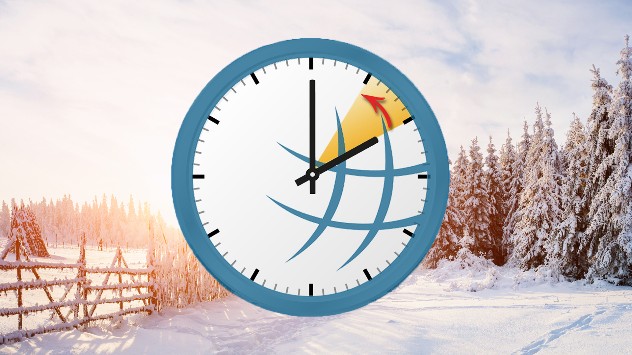
At 2 a.m. on November 2, much of the United States will ‘fall back’ one hour to standard time. Daylight Saving Time (EDT) will end, and Eastern Standard Time (EST) will begin. The sunset will feel much earlier than usual, and many commuters who head to work in the dark in the morning will also return home in the dark. A big advantage of Sunday, November 2, is that we get an extra hour of sleep!

As for the residents of Arizona and Hawaii, don’t worry. It’s just a normal Sunday for you. Arizona hasn’t observed Daylight Saving Time since 1967, while Hawaii has never observed it. However, there is one exception: the Navajo Nation, which spans parts of Arizona, Utah, and New Mexico, does observe the time change.

Territories such as American Samoa, Guam, the Northern Mariana Islands, and Puerto Rico do not take part in the ‘spring forward’ or ‘fall back’ clock changes.

While setting the clocks back an hour on November 2 may make you feel a bit down, the lack of sunlight that the Northern Hemisphere receives until the winter solstice on December 21 will only add to that ‘low-energy’ feeling.

In many cases, this results in seasonal affective disorder. The lack of sunlight affects our mood because sunlight helps the brain release the ‘happiness hormone,’ serotonin. With less sun, hormone levels can drop, which may affect our mood. Exercising, avoiding heavy meals, sticking to your schedule and routine, and taking vitamin D supplements can all help!

We’ve been losing sunlight since the summer solstice on June 20. Although the Earth actually moves closer to our source of light and heat at this time of year and through January, the Northern Hemisphere is tilted away, which limits the amount of light and warmth we receive.

However, when the sun does come out — even during the cold winter months — try to soak up as much as you can. It will help your mood and boost your vitamin D levels!

Mary Mays
More on the topic
Heat wave setting records across Europe. London breaks May record. . . Tuesday, May 26, 2026
European heat wave
Tuesday, May 26, 2026

London breaks May record

Heat wave setting records across Europe
Record-breaking heatwave in Europe. Hotter than most of U.S.. . . Thursday, June 25, 2026
Thursday, June 25, 2026

Hotter than most of U.S.

Record-breaking heatwave in Europe
Meteorological summer is here!. Bye, spring!. . . Monday, June 1, 2026
Monday, June 1, 2026

Bye, spring!

Meteorological summer is here!
All weather news
This might also interest you
The dangers of hail. What to know. . . Saturday, June 27, 2026
Saturday, June 27, 2026

What to know

The dangers of hail
Be ready for tropical activity. Tips & tools. . . Saturday, June 27, 2026
Track hurricanes with the WeatherRadar
Saturday, June 27, 2026

Tips & tools

Be ready for tropical activity
Wildfire risk grows across West. Turning gusty today. . . Friday, June 26, 2026
Western high winds
Friday, June 26, 2026

Turning gusty today

Wildfire risk grows across West
All articles
Weather & Radar

Weather & Radar is also available on

Google Play StoreApp Store

Company

Contact us Privacy policy Legal info Accessibility statement

Services

Uploader

Socials

instagramfacebookthreadslinkList