Home
Weather New York
WeatherRadar
RainRadar
TemperatureRadar
WindRadar
LightningRadar
Weather News
Editor's Pick
Discover the app
Weather widget
Contact us
Apps
Career
Home / Editor's Pick /

After Hurricane Otis hits: Tropical storms growing in intensity

12:00 PM
October 29, 2023

After Hurricane Otis hits
hurricanes growing in intensity

Hurricane

After Hurricane Otis made history with an explosive intensification this past week, research from the NOAA suggests tropical storms are growing stronger.

Capable of inflicting devastating damage, tropical storms are among nature's most ferocious phenomena. News that global warming is strengthening these systems is not welcome.

Tropical storms and hurricanes are fueled by warm ocean water and humidity, as the world’s climate warms the fuel available to intensify these storms grows.

With oceans warming annually, the amount of water evaporating rises. This helps transfer moisture and heat into the air resulting in stronger winds and heavier rains. This is even stronger at times of an El Niño which is currently taking place in the Pacific.

It is mainly because of the water cycle. Water cycles through the environment and moves between the atmosphere, oceans, land, and reservoirs of frozen water.

Otis: Scenes of devastation in Acapulcoread more

Water seeps into the ground and evaporates back into the atmosphere, warming temperatures increase the upper limit of moisture in the air, which in turn raises the chance of heavier rainfall and storms.

Hurricanes are sometimes called “thermal engines,” as they convert the thermal energy of humidity into powerful winds. Therefore, when they make landfall, the systems start to weaken.

This does not prevent them from venturing inland for days at a time, and simulation data from Okinawa Institute of Science and Technology shows that hurricanes that developed over warmer waters took longer to weaken.

In 2022 the total cost of damages stemming from hurricanes during the Atlantic hurricane season totaled $165 billion according to the NOAA. If oceans continue to warm, this is likely to rise in the coming years.

Weather & Radar USA editorial team
More on the topic
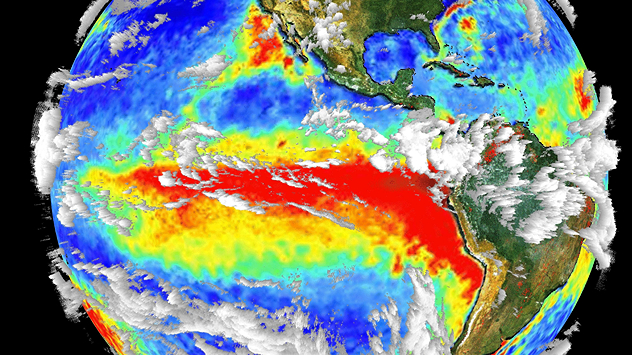
The image shows the central Pacific in a computer model. A striking feature is the ocean coloured red, which indicates very warm seawater.
Tuesday, March 24, 2026

Global consequences

El Niño is back
rip current
Sunday, March 22, 2026

As more head to the coast

Rip currents & safety tips
EF-2 tornado pictured in Colorado
Sunday, March 8, 2026

World of Twisters

Tornado myths answered
All weather news
This might also interest you
Tuesday, March 31, 2026

Northeast U.S.

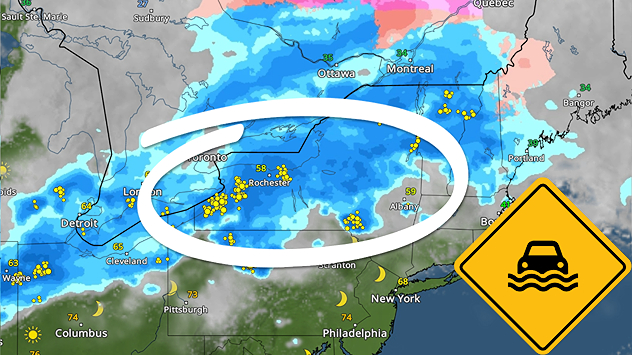
Heavy rain poses flash flood risk
Saturday, April 4, 2026

Severe impacts

The dryline and thunderstorms
Friday, April 3, 2026

Lasting overnight

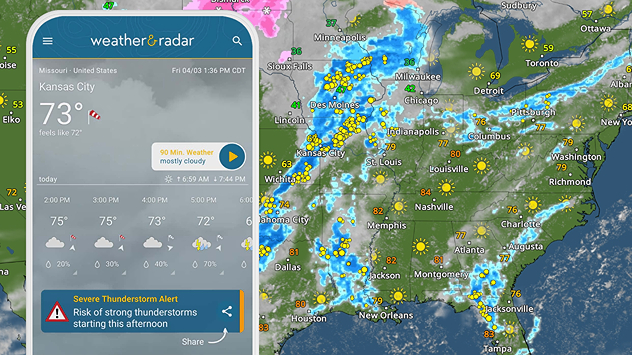
Round two for Midwest, Plains severe storms
All articles
Weather & Radar

Weather & Radar is also available on

Google Play StoreApp Store

Company

Contact us Privacy policy Legal info Accessibility statement

Services

Uploader

Socials

instagramfacebookthreadslinkList