Home
Weather New York
WeatherRadar
RainRadar
TemperatureRadar
WindRadar
LightningRadar
Weather News
Editor's Pick
Discover the app
Weather widget
Contact us
Apps
Career
    Home / Weather News /

    How atmospheric temperatures determine winter precipitation types

11:00 AM
February 22, 2026

Snow, sleet or ice
How atmospheric temps shape winter precipitation
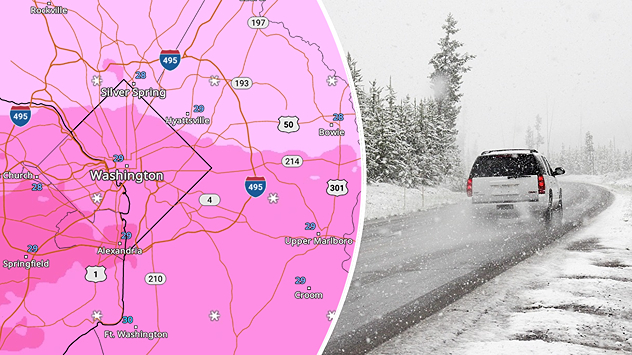
Wintry weather imacts D.C. on the WeatherRadar.
Wintry weather impacts D.C. on the WeatherRadar.

Winter weather isn't just about freezing temperatures at the surface; it's all about what's happening in the atmosphere above.

The type of precipitation we experience — whether it's snow, sleet, freezing rain, or rain — depends on the temperature layers the precipitation passes through as it falls. Each layer of air above us can have a different temperature, influencing whether precipitation stays frozen or melts before reaching the ground.

Here's how each type of winter precipitation is formed:

  • Snow forms when the entire column of air from the clouds to the surface is below freezing (32°F/0°C). The snowflakes remain frozen all the way down, giving us that powdery white blanket.
  • Sleet happens when snowflakes fall through a shallow warm layer (above freezing), partially melting, and then refreeze before hitting the ground. This creates tiny ice pellets that bounce off surfaces.
  • Freezing Rain starts as snow, but it travels through a deeper, warm layer and melts completely into rain. However, as it reaches the ground, it passes through a shallow freezing layer and freezes in contact with cold surfaces, creating a dangerous glaze of ice.
  • Rain occurs when temperatures remain above freezing from the clouds to the ground, preventing any freezing.

These different precipitation types are a result of the complex interplay between layers of warm and cold air in the atmosphere. So, next time you see snow or ice, remember — it's not just the temperature where you are, but what’s happening above your head that makes all the difference!

Try it out now!Wintry precipitation on the WeatherRadar
Federico Di Catarina
More on the topic
Hurricane Polo remains dangerous. Active Pacific. . . Thursday, September 24, 2026
Thursday, September 24, 2026

Active Pacific

Hurricane Polo remains dangerous
10 facts about fog. Low clouds. . . Sunday, September 27, 2026
Fog impacting the Appalachian Mountains.
Sunday, September 27, 2026

Low clouds

10 facts about fog
The average first frosts in the U.S.. Meteorological autumn. . . Sunday, October 4, 2026
First frosts can begin in September as autumn temps move in.
Sunday, October 4, 2026

Meteorological autumn

The average first frosts in the U.S.
All weather news
This might also interest you
First hurricane of the Atlantic season. Isaias forms. . . Thursday, October 8, 2026
After a quiet start, the Atlantic's first hurricane has finally formed. Isaias is the latest first hurricane since the satellite era began in1966. With the Gulf Coast in sight, what impacts are expected?
Thursday, October 8, 2026

Isaias forms

First hurricane of the Atlantic season
Isaias landfall dangers. Surge, outages, flooding. . . Friday, October 9, 2026
Friday, October 9, 2026

Surge, outages, flooding

Isaias landfall dangers
Isaias post-landfall impacts. Southeast soaker. . . Saturday, October 10, 2026
Southeast impacts of Isaias
Saturday, October 10, 2026

Southeast soaker

Isaias post-landfall impacts
All articles
Weather & Radar

Weather & Radar is also available on

Google Play StoreApp Store

Company

Contact us Privacy policy Legal info Accessibility statement

Services

Uploader

Socials

instagramfacebookthreadslinkList