Home
Weather New York
WeatherRadar
RainRadar
TemperatureRadar
WindRadar
LightningRadar
Weather News
Editor's Pick
Discover the app
Weather widget
Contact us
Apps
Career
    Home / Editor's Pick /

    The deadliest: How to stay safe from storm surge

07:30 PM
September 27, 2025

The deadliest threat
How to stay safe from storm surge

With any landfalling tropical storms or hurricanes, one of the threats will be storm surge. Do you know how to stay safe when it threatens your area?

What is storm surge?

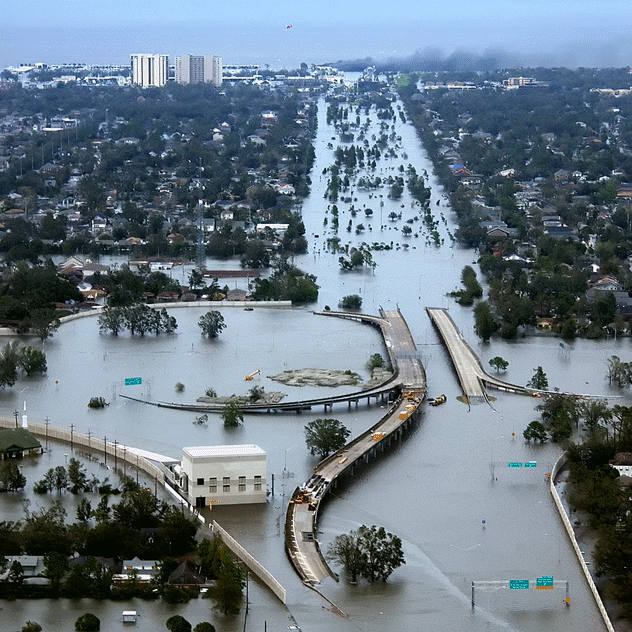
Storm surge is an abnormal rise of ocean water generated by an approaching low-pressure system, often a hurricane. As the storm nears the coast, water is pushed onshore by its strong winds. The inundation causing storm surge, which could be several feet high, is measured above the local astronomical tide.

Several factors can make a storm surge more susceptible than others. One of these is, of course, storm intensity. Stronger storms have higher winds that can exert more force over the ocean, pushing more water inland.

katrina

Another factor is bathymetry and the continental shelf. The shape and slope of the ocean bottom can have a significant effect on storm surge. For example, water that is pushed towards the coast can ride inland more easily over a shallow slope than over a steep one.

Run from the water, hide from the wind

Other factors that can influence storm surge are a storm's forward speed, angle of approach to the coast, central pressure, and the shape and characteristics of coastal features such as bays and estuaries.

Forecasting storm surge

With so many moving parts, it can become quite challenging to pinpoint precisely how much storm surge an area may experience in the event of a hurricane or strong low-pressure system.

Meteorologists at the National Hurricane Center use the Sea Lake and Overland Surge from Hurricanes (SLOSH) model, which considers all the factors mentioned above to predict how much inundation an area may experience.

Staying safe from storm surge

The best way to prepare for storm surge is to understand your risk. If you are near the coast or in a low-lying area, you are more likely to be at risk of storm surge and should closely monitor the progress of storms. If you are in an evacuation zone and prompted to leave, it is a good idea to heed and follow guidance from your local authorities.

Remember, storm surge is just one piece of the puzzle. Heavy rain can make inundation in your area worse, while battering waves above the surge may increase damage to buildings directly along the coast.

Irene Sans
More on the topic
A young woman is kneeling in a cornfield, tending to her plants
Sunday, April 26, 2026

WMO report

Heat is affecting agriculture globally
A harbour in Crete with a reddish-brown, overcast sky
Saturday, April 4, 2026

Blood red skies

Dust storm in Crete
Sunday, April 19, 2026

Why & how does it work?

High pressure & extreme heat
All weather news
This might also interest you
Saturday rainfall
Saturday, May 23, 2026

Flood danger increases

Downpours soak Texas, South
A heatwave will challenge record highs across the Eastern U.S. today and tomorrow.
Tuesday, May 19, 2026

Today and tomorrow

Record heat for the East
Wednesday, May 20, 2026

Texas, South & East

WeatherRadar shows heavy rains
All articles
Weather & Radar

Weather & Radar is also available on

Google Play StoreApp Store

Company

Contact us Privacy policy Legal info Accessibility statement

Services

Uploader

Socials

instagramfacebookthreadslinkList