Home
Weather New York
WeatherRadar
RainRadar
TemperatureRadar
WindRadar
LightningRadar
Weather News
Editor's Pick
Discover the app
Weather widget
Contact us
Apps
Career
Home / Weather News /

The polar vortex - Mother Nature's refrigerator door

08:00 PM
January 11, 2026

The polar vortex
Mother Nature's refrigerator door

Winter's chill has officially settled into the U.S., but temperatures could always be colder! When the polar vortex weakens, even colder air can make its way south as if Mother Nature left the refrigerator door open.

We've all heard of it, but what is the polar vortex? The polar vortex is a large and very cold area of low pressure that surrounds the poles. It always exists, but it becomes stronger and more defined during the winter months. The stratosphere, where this vortex exists, is located above the troposphere, which is where our day-to-day weather occurs.

Recent polar vortex events

2014: The U.S. experienced an intense winter due to a weak polar vortex. In some areas, temperatures dropped to 30-40 degrees below average.

2019: Parts of the Midwest were gripped by temperatures rivaling Antarctica's. Chicago, for instance, saw temperatures plunge to nearly -30°F. Meanwhile, the wind chill factor in southern Minnesota pushed readings down to minus 65°F (-53.9°C) on January 30th.

The vortex typically keeps the coldest air near the poles as it swirls, keeping the cold air contained. However, sometimes the polar vortex can weaken or even collapse, allowing frigid arctic air to spill southward, impacting parts of the United States, Canada, and Europe.

Historically, a collapsing or weakening polar vortex has led to intense and prolonged cold outbreaks. The impacts of these cold air intrusions can be severe, from crippling snowstorms to deadly cold temperatures. Can you see any cold air outbreaks on the TemperatureRadar?

Such incidents lead to challenges, from transportation disruptions to health risks. Prolonged exposure to extreme cold can lead to frostbite, hypothermia, and even death. Furthermore, these extreme conditions strain energy resources as people turn up the heat and put pressure on infrastructures not designed for such cold.

Mary Mays
More on the topic
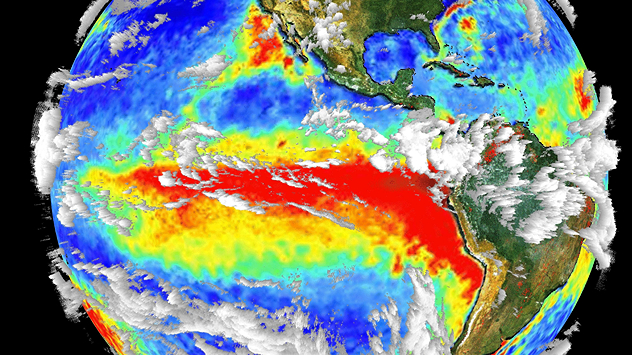
The image shows the central Pacific in a computer model. A striking feature is the ocean coloured red, which indicates very warm seawater.
Tuesday, March 24, 2026

Global consequences

El Niño is back
EF-2 tornado pictured in Colorado
Sunday, March 8, 2026

World of Twisters

Tornado myths answered
Crocuses
Sunday, March 1, 2026

Days are getting longer

Meteorological spring is here
All weather news
This might also interest you
Saturday, April 4, 2026

Severe impacts

The dryline and thunderstorms
Friday, April 3, 2026

New in the app

Your moment, your location, your weather
Tuesday, March 31, 2026

Northeast U.S.

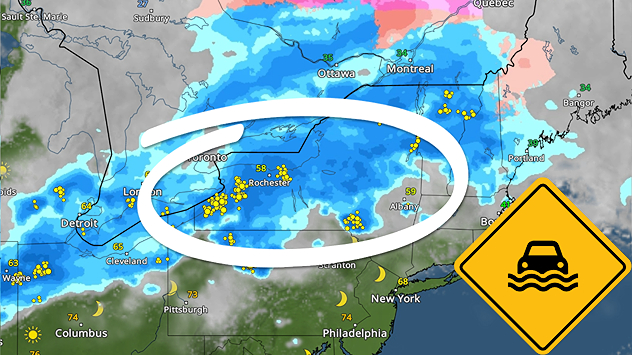
Heavy rain poses flash flood risk
All articles
Weather & Radar

Weather & Radar is also available on

Google Play StoreApp Store

Company

Contact us Privacy policy Legal info Accessibility statement

Services

Uploader

Socials

instagramfacebookthreadslinkList