Home
Weather New York
WeatherRadar
RainRadar
TemperatureRadar
WindRadar
LightningRadar
Weather News
Editor's Pick
Discover the app
Weather widget
Contact us
Apps
Career
Home / Editor's Pick /

What was the impact? Three years of La Niña is ending

12:00 PM
February 28, 2023

What was the impact?
Three years of La Niña is ending

Severe floodingWindsor, Australia has seen extensive flooding in recent years with heavy rain a result of La Niña. - © picture alliance

Latest data shows that the climate phenomenon known as La Niña is almost certain to end this spring after three years of activity… Let’s look at its impact.

La Niña is part of the El Niño Southern Oscillation (ENSO), resulting in cooler waters in the equatorial Pacific.

No two events are the same, but they typically bring more rain to Australia, an increase in Atlantic hurricanes for the US, and a mixture of effects in Africa.

Over the past three years, Australia has undoubtedly seen more rainfall.

As many as eight separate severe flooding events took place over the period resulting in billions of dollars in damages and multiple deaths.

In 2022, the Wilson River passing through the city of Lismore, New South Wales, reached a historic height of 14.4 meters (about 45 feet).

Looking towards the U.S., we see the impact evident in the hurricanes formed. As La Niña took hold during the 2020 hurricane season, we saw a total of 31 tropical cyclones, 14 hurricanes, and seven major hurricanes. It became the most active season on record.

This was followed by the third most active season on record in 2021. While 2022’s season saw fewer events, total damages passing $120 billion were the highest of the period.

Meanwhile, in Africa, La Niña has different effects. In the west, the weather becomes wetter, with floods more likely. In the east, drought is exacerbated, as we see in the Horn of Africa, currently in the grip of the most severe drought for over 70 years.

Learn more about the El Niño Southern Oscillation with our video explainer!

Weather & Radar USA editorial team
More on the topic
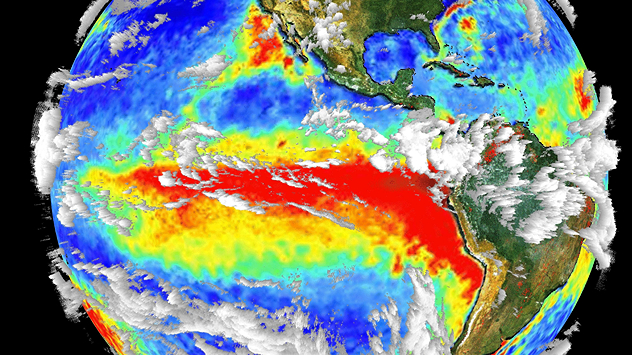
The image shows the central Pacific in a computer model. A striking feature is the ocean coloured red, which indicates very warm seawater.
Tuesday, March 24, 2026

Global consequences

El Niño is back
rip current
Sunday, March 22, 2026

As more head to the coast

Rip currents & safety tips
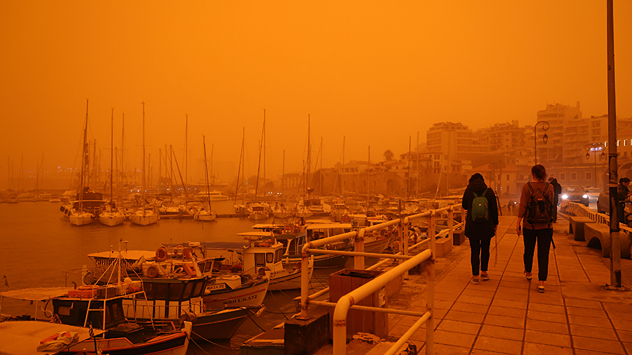
A harbour in Crete with a reddish-brown, overcast sky
Saturday, April 4, 2026

Blood red skies

Dust storm in Crete
All weather news
This might also interest you
Midwest storm threat
Monday, March 30, 2026

Lingers into Tuesday

Upper Midwest severe threat
Monday, April 6, 2026

Frost/freeze possible

Spring chill from Midwest to Northeast
Saturday, April 4, 2026

Severe impacts

The dryline and thunderstorms
All articles
Weather & Radar

Weather & Radar is also available on

Google Play StoreApp Store

Company

Contact us Privacy policy Legal info Accessibility statement

Services

Uploader

Socials

instagramfacebookthreadslinkList