Home
Weather New York
WeatherRadar
RainRadar
TemperatureRadar
WindRadar
LightningRadar
Weather News
Editor's Pick
Discover the app
Weather widget
Contact us
Apps
Career
Home / Editor's Pick /

You must have noticed: Extended heads-up this hurricane season

01:00 PM
June 6, 2023

You must have noticed
Extended lead time this hurricane season

Every year the hurricane season gets a few upgrades. Sometimes there are new products that are released, and some years products that already exist get upgrades. This only verifies that meteorology is a constantly evolving field and that all of us, meteorologists, must continue learning to keep up with the changes. This year was no exception. Let’s see what changed.

You probably have noticed that in the past on our tropical updates, we would highlight storm formation within the next 5 days, but this changed this year to “within 7 days”, this is because the National Hurricane Center has officially increased its outlook periods.

Example: There is a 20 percent chance of tropical development near Florida within the next 7 days.

Usually, when we discuss areas of possible formation, we highlight areas where there might not even be anything there yet. We are looking at an area in the future where there might be something. Think about when you are switching lanes, you are looking at your side view mirror, and if conditions are right (meaning no cars) you switch. Similarly, in these areas is where weather conditions might turn favorable for storm development.

Once a wave or disturbance is in the area, the possibility of storm formation starts to grow. We can highlight these areas in two ways, where a storm might develop within the next 2 days or 7 days. The 7-day lead time was extended from the 5-day lead time used in previous years.

This will allow the public to have more time to prepare, and the official entities to label an invest area, or storm sooner rather than later.

Potential storm surge flooding map now available for Puerto Rico and the U.S. Virgin Islands.

The official potential storm surge flooding map, which is released by the National Hurricane Center, highlights the areas where inundation from storm surge could occur and the heights the water could reach, which will now be available for Puerto Rico and the U.S. Virgin Islands.

These maps are crucial to the coastal population as it takes into account the flooding due to the winds pounding water onto the coast (storm surge), astronomical tides, land elevation, track uncertainties, landfall location, the intensity of the storm, forward speed, and the storm’s size. Water is the number one killer in tropical cyclones. These maps will surely save lives.

Irene Sans
More on the topic
easter
Sunday, April 5, 2026

A chance to reflect

Happy Easter to all
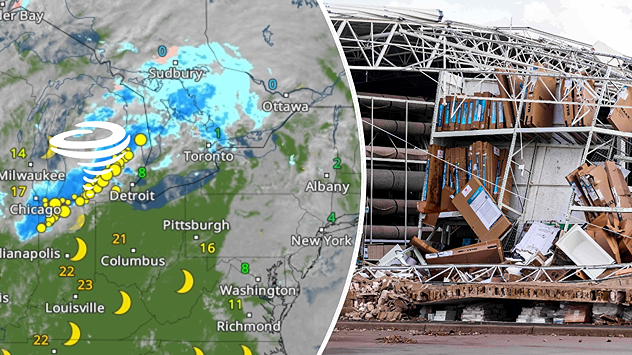
Weather radar with tornado symbol over Michigan next to photo of a destroyed building with collapsed roof and scattered debris.
Extreme WeatherSaturday, March 7, 2026

Deaths, extensive damage

Tornado in Michigan, severe outbreak continues
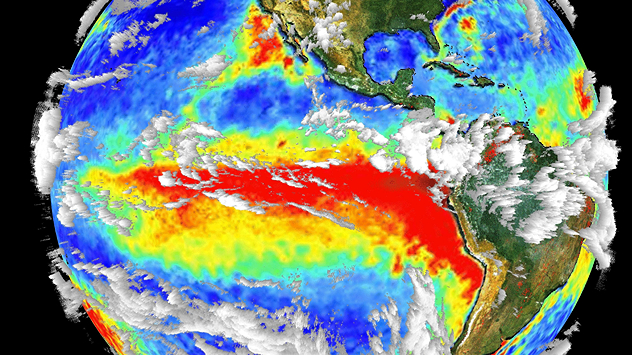
The image shows the central Pacific in a computer model. A striking feature is the ocean coloured red, which indicates very warm seawater.
Tuesday, March 24, 2026

Global consequences

El Niño is back
All weather news
This might also interest you
Thursday, April 2, 2026

Central U.S.

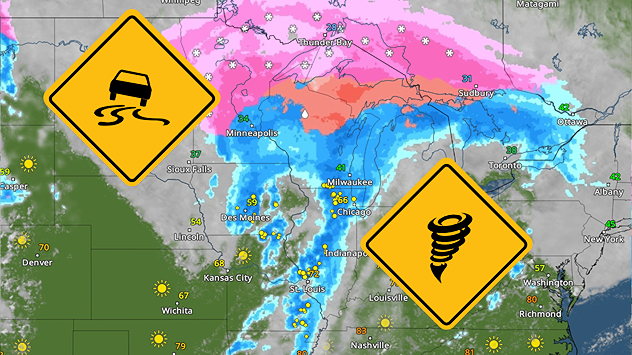
Storm triggers wintry mix, severe weather
Saturday, March 28, 2026

Winter to spring

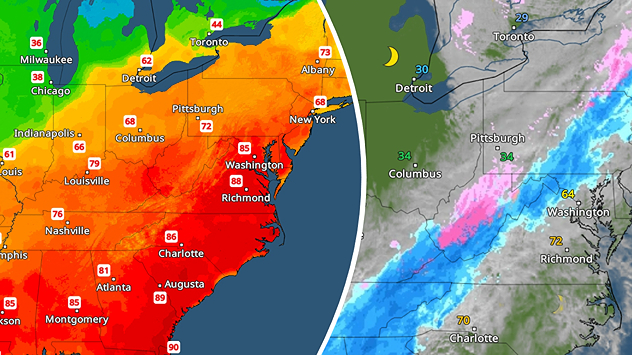
Transition season: What it means for you
Sunday, March 29, 2026

Avoid burns

This Spring: Check the UV index
All articles
Weather & Radar

Weather & Radar is also available on

Google Play StoreApp Store

Company

Contact us Privacy policy Legal info Accessibility statement

Services

Uploader

Socials

instagramfacebookthreadslinkList