Home
Weather New York
WeatherRadar
RainRadar
TemperatureRadar
WindRadar
LightningRadar
Weather News
Editor's Pick
Discover the app
Weather widget
Contact us
Apps
Career
Home / Editor's Pick /

Autumn is here - first frosts in the U.S.

10:00 PM
September 15, 2022

Here before you know it!
The average first frosts in the U.S.

Autumn frost in a fieldAutumn frost in a field. Image by picture alliance / Zoonar | Helge Schulz.

Now that Meteorological Autumn is here, and next week the Autumnal Equinox, it is time to be thinking about the upcoming first frosts. For gardeners, farmers, and those who enjoy the fresh air of Fall, this will be welcome information.

September is, on average, about the time where meteorologists can begin to see cooler air from the North making its way into the US. This cooling can drop temperatures into the 30s and 40s, allowing for frost to form on the ground for many regions. You can keep an eye on the cooler air coming into the US with our interactive TemperatureRadar.

September

As expected, those in the North are usually the first to experience frosty mornings. Mid-to-late September is usually the time when frost forms on the ground for areas in North Dakota, Wyoming, Montana and Maine. The earliest is usually Caribou, Maine, around the Autumnal Equinox, but cooler air can make it in earlier at times.

October

At this time, we usually see cozy sweaters being worn, pumpkin-spice-flavored everything, and even the Halloween candy being stocked to the max in stores. Major cities that will see the ice crystals forming on the shoots of grass usually in October include Boise, Idaho, Denver, Milwaukee, Wis., Cleveland, and Providence, R.I..

November

The leaves have changed colors of red, gold, and yellow and have been falling into crunchy piles on the ground by November. Residents across the central and southern Plains, the Mid-Atlantic, the Tennessee and middle Mississippi valleys will notice the formation of the brittle ice on the fields as temperatures drop into the 30s and 40s in the night.

December

The Pacific Northwest, northern California, the Southwest, the lower Mississippi Valley, and eastward over to the Southeast Coast are usually the final areas to see frost as cooler air settles into the U.S. By this time, many holiday celebrations are taking place and residents in cities like Seattle, Jacksonville, Fla., and Houston, Texas, are bundling up for the coming cooler days.

These times, of course, are the average for first frosts. In fact, more suburban or countryside areas are more likely to see the frost earlier due to cooler air settling here first before the urban areas.

As we move further into Autumn, if you have outdoor plants exposed to the elements, be sure to keep a close eye on temperatures so that frost damage does not occur.

Becca Parker
More on the topic
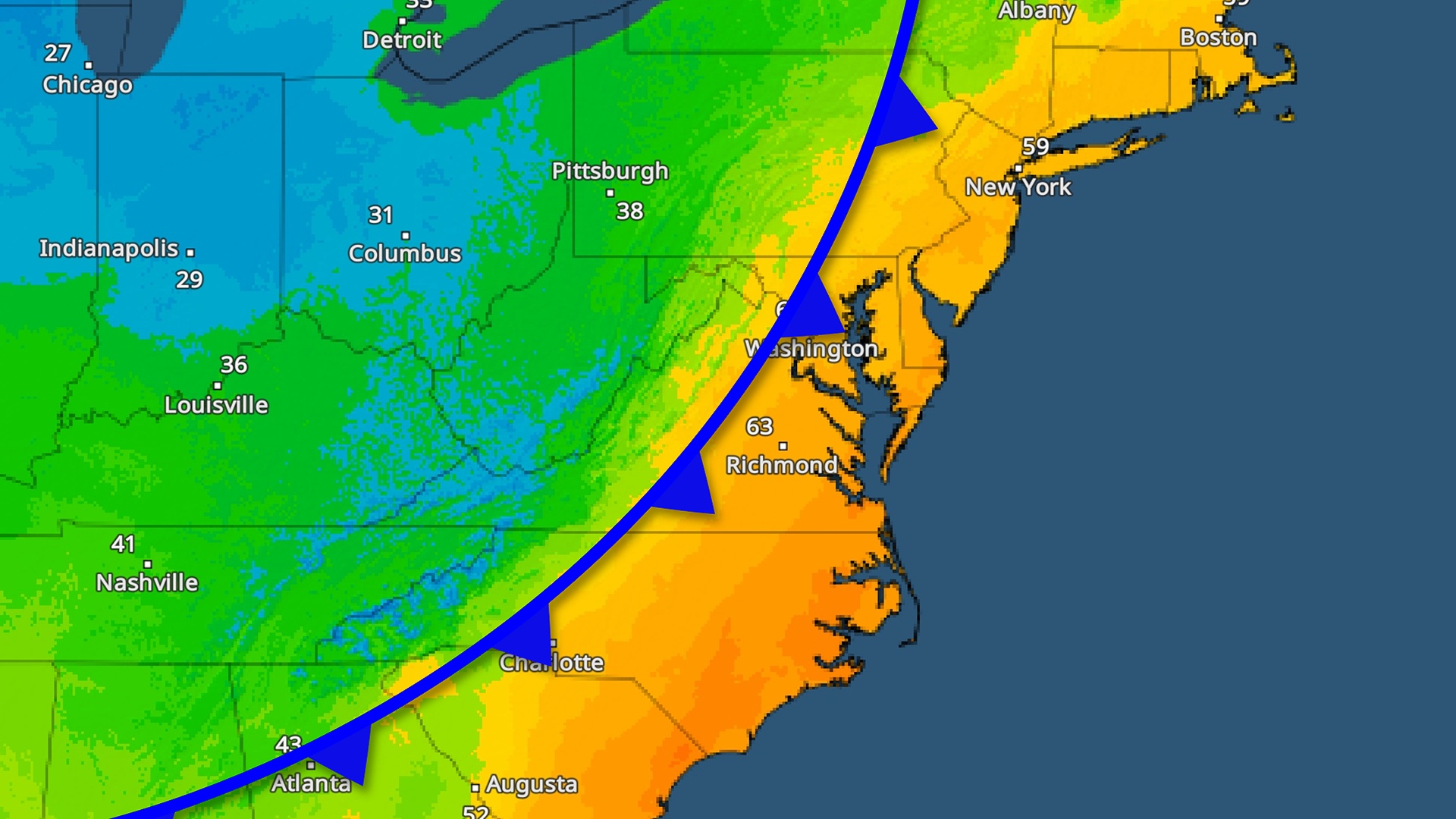
Image of a temperature radar showing a clear distinction between a warm and cold air mass separated by a cold front.
Saturday, February 28, 2026

Weather explained

What are weather fronts?
pothole repair
Sunday, February 15, 2026

Bumpy commute

Cold = spring potholes
EF-2 tornado pictured in Colorado
Sunday, March 8, 2026

World of Twisters

Tornado myths answered
All weather news
This might also interest you
Saturday, March 7, 2026

What to know

The dangers of hail
Sunday, March 8, 2026

Flood safety

Useful tips when driving in the rain
Thursday, March 5, 2026

Tornado threat increases

Severe threat continues for Plains
All articles
Weather & Radar

Weather & Radar is also available on

Google Play StoreApp Store

Company

Contact us Privacy policy Legal info Accessibility statement

Services

Uploader

Socials

instagramfacebookthreadslinkList