Home
Weather New York
WeatherRadar
RainRadar
TemperatureRadar
WindRadar
LightningRadar
Weather News
Editor's Pick
Discover the app
Weather widget
Contact us
Apps
Career
    Home / Weather News /

    Dry period expected

03:25 PM
July 7, 2026

Dry period expected
Saharan dust to reach Florida

Travelling at least 4,000 miles to reach Florida, Saharan dust is expected to reach and impact the weather across the Sunshine State. Worsening air quality could occur too.

Frequent storms, heavy rains and intense heat have been the pattern across the Florida Peninsula in the last several days - with the heat starting very early in the morning and reaching as high as 99 degrees with added humidity making it feel much hotter.

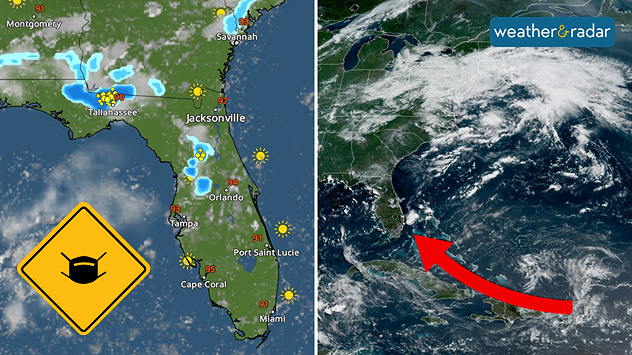
Saharan dust seen on the satllite image (right) moving westward toward Florida. Air quality impacts are expected.
Saharan dust seen on the satellite image (right) moving westward toward Florida. Air quality impacts are expected.

A change of pace is ahead for Florida with the arrival of Saharan dust this week. This dusty Saharan air layer has already affected the eastern and central Caribbean this week, triggering heat alerts across much of Puerto Rico.

Once the dust reaches South Florida, the risk of showers will decrease starting Wednesday. Gradually, on Thursday and Friday, central and northern Florida will also see the arrival of the dust.

DUST! DUST! DUST!

July 2024 is known as the second-dustiest July on record. This was an anomaly, as the "dust hose" typically shuts off in late June. We have seen several dust plumes reach the Americas this year, but none as intense as those of 2024.

Check your air quality

Dust also poses other issues, such as respiratory problems for people with pre-existing conditions. You can take us along on vacation and check the Air Quality Index for your destination—anywhere in the world! If your eyes are watering or itching... blame the dust!

Any other impacts?

Saharan dust supplies a large amount of nutrients to forest and marine ecosystems. It also contains significant amounts of iron, which marine microorganisms—such as algae—can use as a food source. As these organisms multiply, they can become toxic, triggering red tide blooms. Our team of meteorologists will continue to provide you with updates.

Irene Sans
More on the topic
10 facts about fog. Low clouds. . . Sunday, September 27, 2026
Fog impacting the Appalachian Mountains.
Sunday, September 27, 2026

Low clouds

10 facts about fog
All about nocturnal severe weather. Risks & preparedness. . . Saturday, September 5, 2026
Saturday, September 5, 2026

Risks & preparedness

All about nocturnal severe weather
Hawaii's second 2026 hurricane impact. Hurricane Lowell. . . Tuesday, September 8, 2026
Tuesday, September 8, 2026

Hurricane Lowell

Hawaii's second 2026 hurricane impact
All weather news
This might also interest you
Rounds of rain for Florida. Not so Sunshine State. . . Monday, October 5, 2026
While October typically marks a transition to drier weather in Florida, the first full week of the month is kicking off with heavy rain. But how much rain are we talking about?
Monday, October 5, 2026

Not so Sunshine State

Rounds of rain for Florida
Hurricane drought in the Atlantic. 352 days and counting. . . Wednesday, September 30, 2026
The last hurricane to form in the Atlantic was Hurricane Melissa on October 13, 2025, 352 days ago. So what's responsible for this hurricane drought?
Wednesday, September 30, 2026

352 days and counting

Hurricane drought in the Atlantic
Useful tips when driving in the rain. Flood safety. . . Saturday, October 3, 2026
Saturday, October 3, 2026

Flood safety

Useful tips when driving in the rain
All articles
Weather & Radar

Weather & Radar is also available on

Google Play StoreApp Store

Company

Contact us Privacy policy Legal info Accessibility statement

Services

Uploader

Socials

instagramfacebookthreadslinkList